
Research Ops at CloudBees
Creating a Research-Driven Product Organisation
Why launch ResearchOps?
Great design is about both discovering the right opportunities and delivering the right solutions. While CloudBees excelled at execution, its research and discovery capabilities were less mature.
Our goal was to establish the people, processes, and tools needed to bring user insight into product decision-making.
Outcomes
Established a ResearchOps capability to support evidence-based product development at scale.
Created a centralised research repository, making customer insights more accessible across teams.
Evolved personas and customer understanding through ongoing discovery and synthesis activities.
Defined research standards, frameworks, and best practices to improve the quality and consistency of research.
Improved research tooling and workflows, enabling faster analysis, synthesis, and dissemination of insights.
Strengthened product discovery practices through closer integration of user research into roadmap planning.
Collaborated on the evolution and adoption of a shared design system across core products.
Reduced UX debt by identifying usability issues and opportunities for experience improvements.
Introduced iterative user testing to support evidence-based product decisions.
Defined future ChatOps experiences through customer research, concept validation, and requirements discovery.
Setting up ResearchOps
Drawing on my experience supporting large-scale research operations at Oracle, I recognised that CloudBees lacked many of the processes, tools, and governance structures needed to scale user research effectively.
To establish a more mature research practice, I introduced a foundational ResearchOps framework focused on three key areas:
• Defined and socialised a tailored Double Diamond design and discovery process to create a shared approach to product development.
• Created supporting documentation, Confluence guidelines, and Jira workflows to standardise research planning, execution, and knowledge sharing.
• Established a centralised research repository and associated tooling, enabling research insights to be captured, organised, and accessed across Design and Product teams.
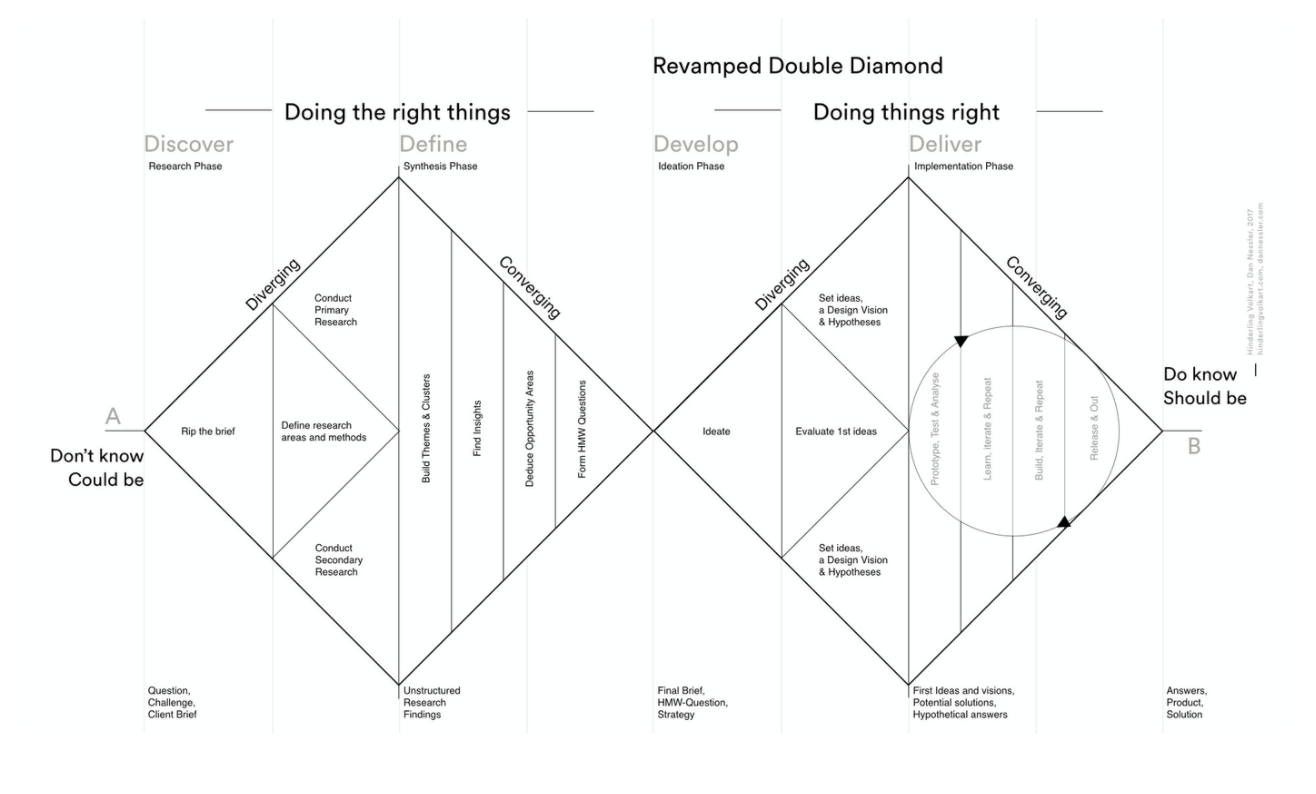
The Double Diamond user experience design Model.
To establish a shared approach to discovery and product development, we introduced the Design Council’s Double Diamond framework.
By separating problem discovery from solution delivery, the model helped teams align around user needs, validate assumptions, and make more informed product decisions.
The ResearchOps initiative focused on strengthening the Discover and Define phases, creating a stronger foundation for evidence-based design.
The Goal:
Map the ResearchOps model over our current toolset.
As Confluence and Jira were already deeply embedded within the organisation, they provided a natural foundation for establishing the ResearchOps framework. We developed a set of guidelines, workflows, templates, and governance practices within these tools, creating a consistent approach to planning, conducting, and sharing research across teams.
The following examples illustrate how the ResearchOps model was translated into practical workflows, templates, and research activities within Confluence and Jira.


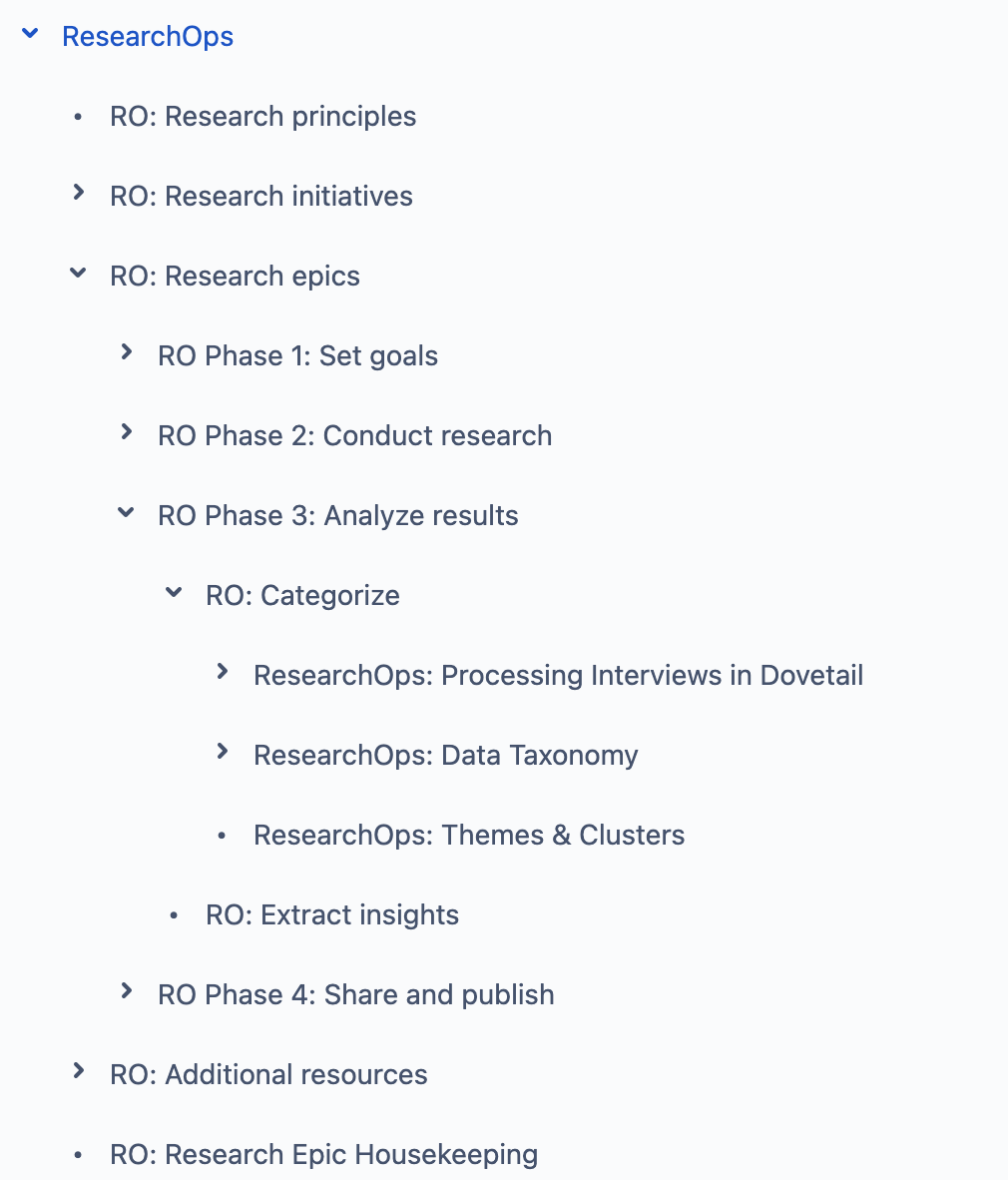
Next Step: Establishing a Research Repo
A centralised research repository is a critical component of any research-led organisation. Without a shared source of truth, valuable customer insights become fragmented across documents, presentations, and individual teams, making them difficult to discover and reuse.
To address this, we evaluated a range of research management platforms and selected Dovetail as the foundation for our research repository. The platform was initially introduced within the Design team before being expanded across the wider Product organisation, creating a shared space for storing, analysing, and distributing research insights.
Before rolling out the repository more broadly, it was important to establish clear governance, taxonomy, and tagging standards to ensure insights could be consistently categorised, searched, and reused across teams.
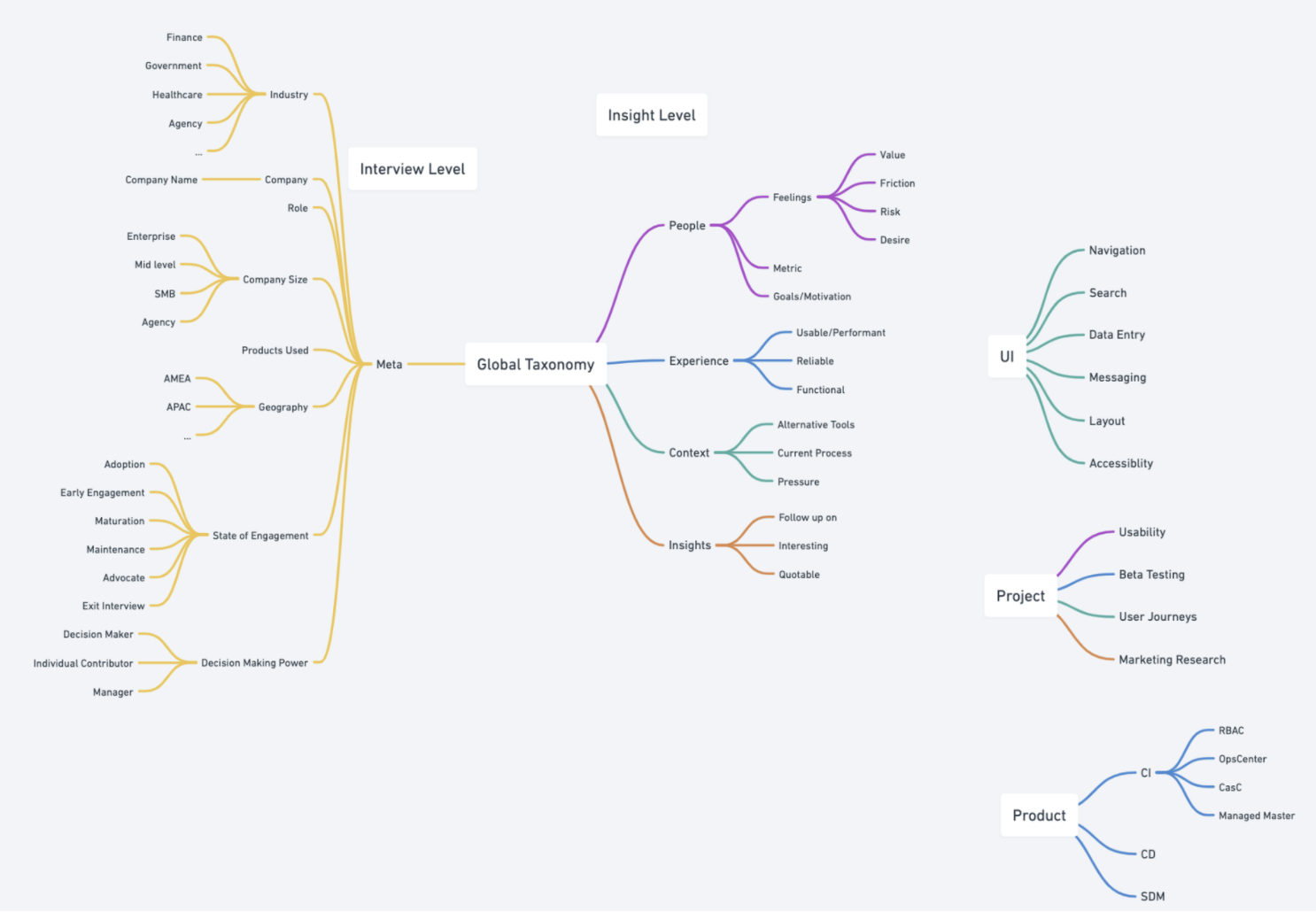
Taxonomy & Tagging
Research repositories rely on consistent tagging to transform interview transcripts into a searchable and reusable knowledge base. To ensure insights could be easily discovered, filtered, and analysed over time, we established a shared taxonomy that standardised how research findings were categorised across studies.
The resulting framework combined interview metadata with five primary dimensions: People, Experience, Context, Insights, and UI. This structure created a scalable foundation for organising customer knowledge and enabled teams to uncover patterns, identify themes, and retrieve relevant insights more efficiently.
Using the Taxonomy

Once established, the taxonomy becomes a shared organisational framework that enables research insights to be consistently tagged, connected, and discovered across all projects and teams.

The taxonomy is applied during the analysis of user interviews, enabling insights to be consistently tagged, categorised, and connected across research studies.

With dozens of interviews conducted across multiple teams and product areas, a structured approach to organising research became essential. The taxonomy provided a consistent framework for connecting related insights and uncovering patterns at scale.
Step Three:
Discover Patterns & Themes
With a centralised repository and consistent taxonomy in place, insights can be quickly discovered across projects, teams, and research studies. Shared tags and filters make it easy to identify patterns, connect related findings, and surface relevant customer knowledge at scale.
Splice.

We can search and cross-section our data via our data taxonomy across the board…
Present.
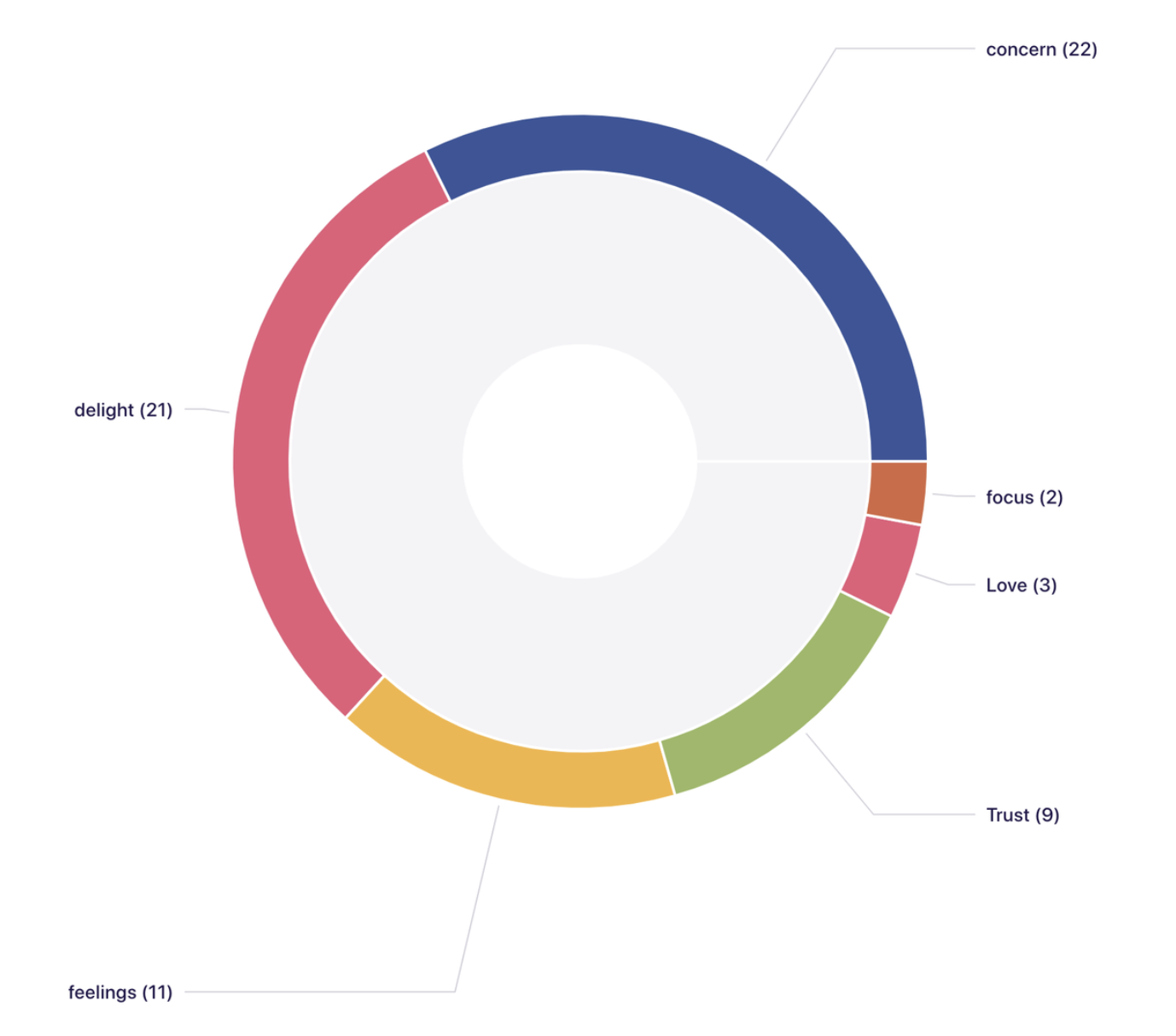
…and gain access to quantitative charts for analysis and presentations…
…and present.
The final stage of the process is synthesising research findings into themes and actionable insights. Each theme brings together related observations, comments, and behaviours identified across multiple customer interviews, transforming individual pieces of feedback into a coherent understanding of user needs.
By grouping and summarising these findings, teams can uncover recurring patterns, prioritise opportunities, and translate customer insights directly into product strategy, roadmap planning, and iterative design improvements.
The examples below highlight several key themes identified during research into DevOps Workload Analytics.

Once this was in place, it’s time to socialise it: The good news is that every Product Owner or Manager who saw this immediately fell in love with it and wanted access. Now, all Design and Product are using this repo. FTW!
From Research Operations to Product Intelligence
The success of the initiative extended beyond the repository itself. Growing demand for customer insights led to the formation of a dedicated Data Insights function, which was later integrated into the Design organisation. The momentum generated by these efforts also helped justify investment in UX Research, resulting in the hiring of the company’s first dedicated researchers.
More importantly, the initiative contributed to a broader cultural shift towards evidence-based decision-making. Research and customer insights became increasingly embedded within product development, creating stronger connections between customer needs, product strategy, and design execution.
Dream it.
The Product Insights team is born…
Build it.
…with plenty to do.